Training Tip: Transitions Will Help Your Horse Become Softer and More Supple
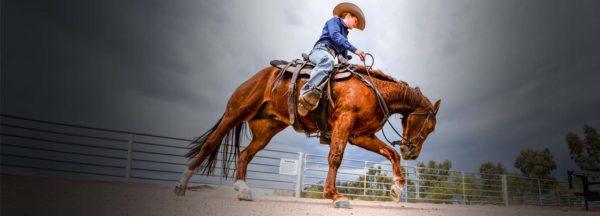
If you want your horse to be tuned in to you and be responsive to your cues, get in the habit of practicing transitions. Transitions are asking the horse to stop, slow down or speed up when you cue him to. They simultaneously work on the horse’s gas pedal and brakes and his overall suppleness.
Examples of specific transition exercises in the Method include: One Rein Stops, Bending Transitions, Yield and Bend, Draw to a Stop, and Drive to a Stop. While those are specific transition exercises, you can turn anything into a transition. For example, if you’re out on the trail, you can trot your horse forward, sit down in the saddle to bring him to a walk and then two-track him. Get a few good steps and then trot him off again. How you incorporate transitions into your training sessions is limited only by your ability to get creative.
As you begin to add transitions (or more of them) into your lessons, you’ll notice three key benefits. In previous tips, we’ve covered benefit #1 “Your Horse Will Engage With You” and benefit #2 “Your Horse Will Rate Your Seat.”
Benefit #3: Your Horse Will Become Softer and More Supple
I want my horses’ bodies to be like big pieces of playdough that I can shape and move off a feather-light cue. The best way to accomplish that is by working on suppling and softening his five body parts—his head and neck, poll, shoulders, ribcage and hindquarters— throughout every training session. I look at it as if I’m oiling hinges every ride.
It doesn’t matter what sport you do with your horse – western pleasure, dressage, trail, jumping, cutting, reining, etc., every single sport revolves around the horse being soft, supple and relaxed in order to perform his best.
Looking for more training tips? Check out the No Worries Club. Have a training question? Send it to us at [email protected].
