Training Tip: Warm Up With Groundwork Before Hitting the Trail
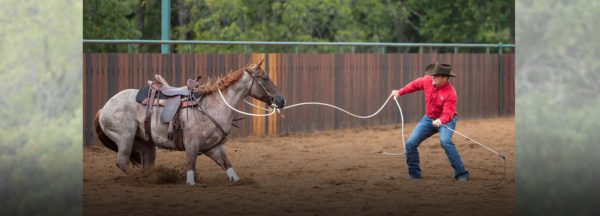
Before hitting the trail, be sure your horse is in the right frame of mind, meaning he’s calm, using the thinking side of his brain and focused on you. Most of the time, horses spook because they’re fresh and using the reactive side of their brain. Don’t just pull your horse out of the pasture, throw the saddle on him and head out on the trail. Set yourself up for success by practicing groundwork and reminding your horse that you are the leader and he needs to respect you and let you call the shots.
If you’re at home, practice groundwork exercises like Lunging for Respect Stage Two, the C-Pattern, Sidepassing, etc. in the arena. If you’ve trailered your horse somewhere for a ride, find an open area where you can get his feet moving and changing directions. Remember, in order to get a horse to respect you and use the thinking side of his brain, you have to move his feet forwards, backwards, left and right. The more you ask the horse to change directions, the quicker you’ll get his attention. The entire time that you’re working with the horse on the ground, he should be hustling his feet. Don’t just let him lazily jig-jog around. You want to get rid of any freshness he might have before taking him out on the trail.
