Training Tip: Work on Individual Maneuvers to Avoid Anticipation
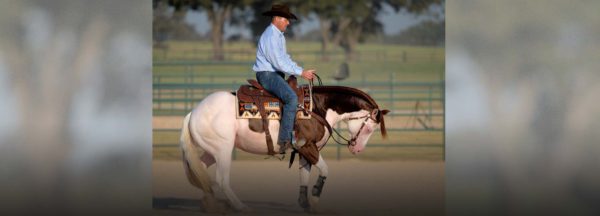
If you show your horse in an event with patterns, like reining or dressage, don’t practice the pattern from start to finish during training sessions. Doing so is likely to cause your horse to anticipate the next maneuver and get ahead of you. Taking your horse through the same patterns over and over is not only boring, but teaches him that the same things happen at the same places in the arena, in the same sequence. Instead of waiting for your cues, your horse will be thinking, “I already know what comes next, we’ve done this a million times” and will take matters into his own hands.
When you’re schooling your horse, work on individual maneuvers within the pattern. I rarely take my horses through an entire reining pattern. Instead, I focus on individual maneuvers in each training session. In one session, my focus might be on improving my horse’s backup and in the next it may be on lead changes. I’m constantly evaluating each horse, figuring out what they need the most work on. The thing about horses is that they’re always fluctuating. One week I may need to focus on softening my horse and the next week the focus may be on speed control.
