Training Tip: Don’t Create a Cinchy-Horse Problem
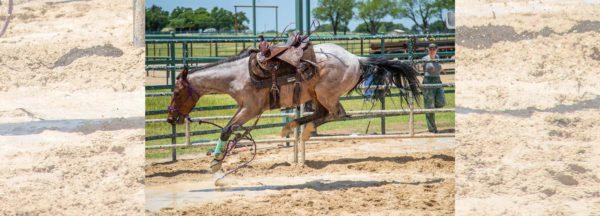
If thought isn’t given to how you do the cinch up, you can teach a horse to be “cinchy.” A “cinchy” or “cold-backed” horse has a tendency to overreact and possibly buck when pressure is applied around his belly or flank area. It’s normal for a horse to feel reactive whenever this area is squeezed tightly. Horses hate tight, narrow spaces or feeling claustrophobic, so when you wrap a rope or cinch around a horse’s belly and pull it tight, it can make the horse feel trapped and uncomfortable.
Horses are also protective of their bellies because they don’t have a lot of muscle or tissue there to protect their abdomens and organs. If a lion attacked a horse, for example, and the lion got even one claw dug into the horse’s abdominal muscles, the horse could potentially end up with a life-threatening infection even if he escaped. It’s part of horses’ self-preservation instinct to be very protective of their bellies, their hocks and legs down to their hooves, and from their ears forward.
Throwing the saddle on your horse and snugging the cinch up as tight as you can get it right away is a good way to create a cinchy horse. Think of it this way, imagine if when you first got out of bed in the morning someone grabbed a hold of your underwear and gave you a big wedgie. That’d make you pretty nervous about jumping out of bed. So always do the cinch up in stages and give your horse a chance to get used to the pressure.
Doing the cinch up just once can also fool you into thinking you’ve got it snug enough. While it might be tight when they first get in the saddle, it gradually loosens up as you ride the horse. Then you’ll find yourself in a wreck when the saddle slips underneath the horse’s belly.
The bottom line is to keep your horse’s comfort in mind and yourself out of danger by always following the rule of three when doing up the cinch.
Have a horsemanship question or looking for more training tips? Check out the No Worries Club.
