Training Tip: Handling a Nervous Horse on the Trail
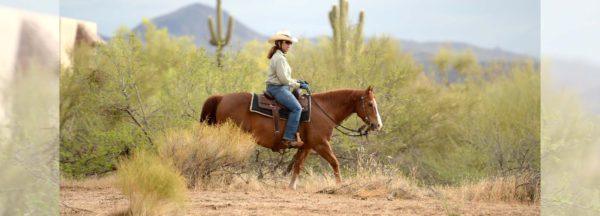
Question: My horse is very well-behaved and level-headed. I was on a ride last night with a friend whose horse is also very well-behaved. We rode past a pasture and the lone horse in the pasture came running to the fence. My horse got upset and jiggy, so I yielded his hindquarters. Should I have just gotten off and addressed this from the ground? He settled down, but I was frightened. – Karrenb
Clinton’s Answer: You did a good job of handling the situation. When your horse got nervous and used the reactive side of his brain, you took charge of the situation by putting his feet to work and getting him to use the thinking side of his brain. That’s the right answer. As long as you’re redirecting his feet, he doesn’t have time to think about whatever scared him; his attention is on you.
In situations like this, I love to ride my horses in a series of serpentines, hustle their feet around in a circle, or, if there’s space, practice rollbacks with them. Allowing the horse to move forward and constantly changing directions not only gets him to focus on you, but it allows him to blow off some excess energy. Riding your horse in this manner also gives you something to focus on rather than your fear. If you’re constantly thinking about how you’re going to ask your horse to turn and hustle his feet, it’s hard to concentrate on being afraid of losing your balance, etc.
Whether you handle a situation like this from the saddle or the ground is up to you. If you’re not confident about your ability to stay in the saddle, then it’s best to do a One Rein Stop. Then, when your horse is standing still, dismount. Once you’re on the ground, you can put his feet to work, doing some Lunging for Respect, backing him up, etc. This is where it’s beneficial to ride with mecate reins (reins that have a built-in lead rope) so that you can easily dismount and practice groundwork. Again, it doesn’t matter how you move the horse’s feet, just that you ask him to do so with energy, and the more changes of direction you ask him to do, the better.
Have a horsemanship question or looking for more training tips? Check out the No Worries Club.
